domingo, 24 de noviembre de 2019

Past Tense Irregular Verbs List

Past Tense Irregular Verbs List

English Grammar Rules

Part One

The following is a list of Irregular Verbs in English:
VerbPast SimplePast Participle
arisearosearisen
babysitbabysatbabysat
bewas / werebeen
beatbeatbeaten
becomebecamebecome
bendbentbent
beginbeganbegun
betbetbet
bindboundbound
bitebitbitten
bleedbledbled
blowblewblown
breakbrokebroken
breedbredbred
bringbroughtbrought
broadcastbroadcastbroadcast
buildbuiltbuilt
buyboughtbought
catchcaughtcaught
choosechosechosen
comecamecome
costcostcost
cutcutcut
dealdealtdealt
digdugdug
dodiddone
drawdrewdrawn
drinkdrankdrunk
drivedrovedriven
eatateeaten
fallfellfallen
feedfedfed
feelfeltfelt
fightfoughtfought
findfoundfound
flyflewflown
forbidforbadeforbidden
forgetforgotforgotten
forgiveforgaveforgiven
freezefrozefrozen
getgotgot (BrE)
gotten (AmE)
givegavegiven
gowentgone
growgrewgrown
hang*hunghung
havehadhad
hearheardheard
hidehidhidden
hithithit
holdheldheld
hurthurthurt
keepkeptkept
knowknewknown
laylaidlaid
leadledled
leaveleftleft
lendlentlent
letletlet
lie **laylain
lightlitlit
loselostlost
makemademade
meanmeantmeant
meetmetmet
paypaidpaid
putputput
quitquitquit
read ***readread
rideroderidden
ringrangrung
riseroserisen
runranrun
saysaidsaid
seesawseen
sellsoldsold
sendsentsent
setsetset
shakeshookshaken
shineshoneshone
shootshotshot
showshowedshown
shutshutshut
singsangsung
sinksanksunk
sitsatsat
sleepsleptslept
slideslidslid
speakspokespoken
speedspedsped
spendspentspent
spinspunspun
spreadspreadspread
standstoodstood
stealstolestolen
stickstuckstuck
stingstungstung
strikestruckstruck
swearsworesworn
sweepsweptswept
swimswamswum
swingswungswung
taketooktaken
teachtaughttaught
teartoretorn
telltoldtold
thinkthoughtthought
throwthrewthrown
understandunderstoodunderstood
wakewokewoken
wearworeworn
winwonwon
withdrawwithdrewwithdrawn
writewrotewritten
* HANG - Hang has two different meanings. The first is "to attach (or hang) something in a high position" (e.g. on the wall or on a hook). In this case we use the above verbs Hang-Hung-Hung.
BUT when Hang means "to kill someone by putting a rope around someone's neck and leaving them in a high position without any support", we use different verbs: Hang-Hanged-hanged. This verb is typical of public executions in the past. (e.g. They hanged him in the main square.)
** LIE - Lie has two meanings. When it means "to put your body in a horizontal position" (normally on a bed) it uses the Lie-Lay-Lain verbs.
BUT it is regular Lie-Lied-Lied when it has the other meaning of "not to say the truth".
*** READ - Even though they are written the same, the pronunciation is different in the Past Tense and Past Participle form.

Part Two

The following verbs can be regular or irregular:
VerbPast SimplePast Participle
burnburned OR burntburned OR burnt
dreamdreamed OR dreamtdreamed OR dreamt
learnlearned OR learntlearned OR learnt
smellsmelled OR smeltsmelled OR smelt
The second form (burnt, dreamt etc.) is more common in British English.

Part Three

Verbs that have the same form in Present, Past and Past Participle form:
VerbPast SimplePast Participle
betbetbet
broadcastbroadcastbroadcast
cutcutcut
hithithit
hurthurthurt
letletlet
putputput
quitquitquit
readreadread
setsetset
shutshutshut
spreadspreadspread
All of the verbs above are written and pronounced the same in the three forms EXCEPT for Read which is written the same but pronounced differently.

101 Irregular Past Tense Verbs in English
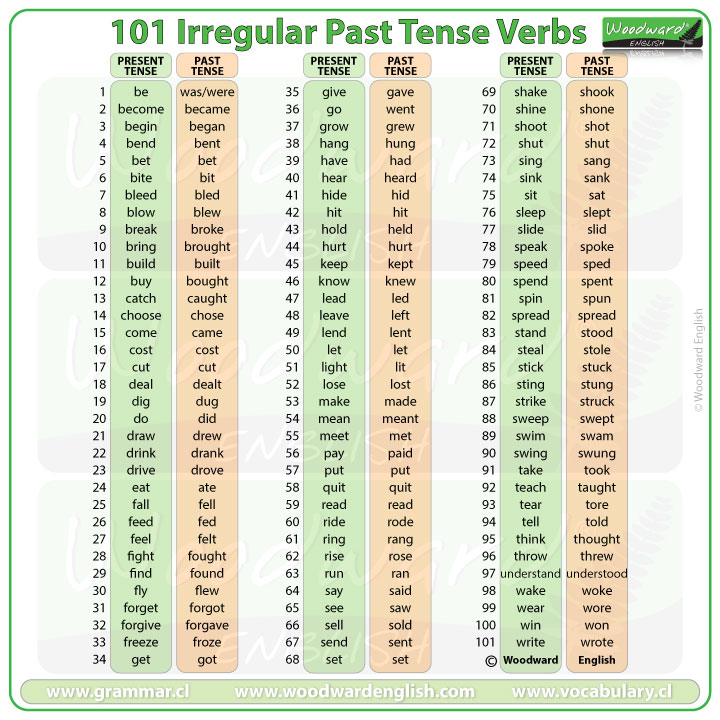
101 Irregular Past Tense Verbs in English

LESSON 6.2 | PAST TENSE

LESSON 6.2 | PAST TENSE

Simple Past Tense

English Grammar

The Simple Past Tense, often just called the Past Tense, is easy to use in English.
If you already know how to use the Present Tense, then the Past Tense will be easy.
In general, the Past Tense is used to talk about something that started and finished at a definite time in the past.

How to form the Past Tense in English

The main rule is that for every verb in English, there is only one form of it in the past tense.
(The exception is the Past tense of To Be, which has two forms: was and were)
This is totally different from other languages such as Spanish, French, Italian etc. where you change the verb ending for every subject.
For example: The past tense of the verb want is wanted.
Wanted is used as the past tense for all subjects/pronouns.
  • I wanted
  • You wanted
  • He wanted
  • She wanted
  • It wanted
  • We wanted
  • They wanted
So you just have to learn one word to be able to use it in the past tense. In this case we just needed to learn the one word wanted which can be used for all subjects (or people).

Past Tense Regular Verbs

To change a regular verb into its past tense form, we normally add –ED to the end of the verb.
  • play – played
  • cook – cooked
  • rain – rained
  • wait – waited
There are some exceptions with a slight change in spelling which you can see here:
Spelling of words ending in ED.

Examples of sentences using regular verbs in the past tense

  • Last night I played my guitar loudly and the neighbors complained.
  • She kissed me on the cheek.
  • It rained yesterday.
  • Angela watched TV all night.
  • John wanted to go to the museum.
Note: There are three different ways of pronouncing the –ed at the end of a verb in the past tense.
We recommend reading our guide about the pronunciation of –ED at the end of words.

Negative sentences in the Past Tense

We use didn't (did not) to make a negative sentence in the past tense.
This is for regular AND irregular verbs in English.
(Exception is To Be and Modal Verbs such as Can)
Compare the following:
Present: They don't live in Canada.
Past: They didn't live in Canada.
The main verb (live in the example above) is in its base form (of the infinitive). The auxiliary DIDN'T shows that the sentence is negative AND in the past tense.
NOTICE: The only difference between a negative sentence in the present tense and a negative sentence in the past tense is the change in the auxiliary verb.
Both don't and doesn't in the present tense become didn't in the past tense.
Compare the negative sentences in the examples below:
Present: You don't need a mechanic.
Past: You didn't need a mechanic.
Present: You don't walk to work.
Past: You didn't walk to work.
Present: He doesn't speak Japanese.
Past: He didn't speak Japanese.

Examples of negative sentences in the Past Tense

  • I didn't want to go to the dentist.
  • She didn't have time.
  • You didn't close the door.
  • He didn't come to my party.
  • They didn't study so they didn't pass the test.
  • We didn't sleep well last night.

Questions in the Past Tense

We use did to make a question in the past tense.
This is for regular AND irregular verbs in English.
(Exception is To Be and Modal Verbs such as Can)
Compare the following:
Present: Do they live in France?
Past: Did they live in France?
The main verb (live in the example above) is in its base form (of the infinitive). The auxiliary DID shows that the question is in the past tense.
NOTICE: The only difference between a question in the present tense and a question in the past tense is the change in the auxiliary verb.
Both Do and Does in present tense questions become Didn't in past tense questions.
Compare the questions in the examples below:
Present: Do you need a doctor?
Past: Did you need a doctor?
Present: Do you ride your bike to work?
Past: Did you ride your bike to work?
Present: Does he live in Italy?
Past: Did he live in Italy?
We can also use a question word (Who, What, Why etc.) before DID to ask for more information.
  • Did you study? – Yes, I did.
  • When did you study? – I studied last night.
  • Where did you study? – I studied at the library.

Examples of Questions in the Past Tense

  • Did you go to work yesterday?
  • Did they arrive on time?
  • Did she like the surprise?
  • Where did she go?
  • What did you do yesterday?
  • What did you say? - I didn't say anything.
  • Why did we have to come?

Irregular Verbs in the Past Tense

Irregular verbs are ONLY irregular in affirmative/positive sentences.
(An exception to this is with the verb TO BE in the Past Tense).
For example: The past tense of GO is WENT.
It does not end in –ED so it is considered irregular.
The word went is used for all subjects – I, you, we, they, he, she, it.
  • I went to the beach
  • He went to the park.
  • She went to the zoo.
  • They went to the library.
BUT, as we mentioned before, it is only in its irregular form (went) in sentences that are affirmative/positive.
Compare the following using GO in the past tense.
  • They went to the beach
  • They didn't go to the beach --- Didn't shows that we are talking in the past tense.
  • Did they go to the beach? --- Did shows that we are talking in the past tense.
Another example with an irregular verb.
The past of EAT is ATE.
  • You ate my cake.
  • You didn't eat my cake.
  • Did you eat my cake?

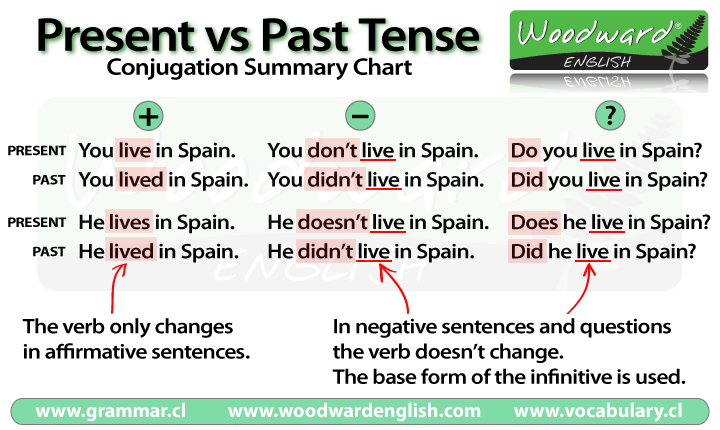
Present vs Past Tense Summary Chart

Present Tense vs Past Tense Summary Chart

LESSON 6.1 | WAS / WERE (PAST TENSE)

LESSON 6.1 | WAS / WERE (PAST TENSE) 
To Be - Past Tense
English Grammar Notes
The past tense of To Be in English has two forms: WAS and WERE

To Be - Affirmative

Subject
To Be
Examples
I
was
I was tired this morning.
You
were
You were very good.
He
was
He was the best in his class.
She
was
She was late for work.
It
was
It was a sunny day.
We
were
We were at home.
You
were
You were on holiday.
They
were
They were happy with their test results.

To Be - Negative Sentences

The negative of To Be can be made by adding not after the verb (was or were).
Subject
To Be
Examples
I
was not
I was not tired this morning.
You
were not
You were not crazy.
He
was not
He was not married.
She
was not
She was not famous.
It
was not
It was not hot yesterday.
We
were not
We were not invited.
You
were not
You were not at the party.
They
were not
They were not friends.


To Be - Negative Contractions

The can make negative contractions of the verb To Be in the Past tense by joining the verb (was or were) and n't (e.g. were not = weren't). We don't make a contraction of the subject and the verb (e.g. I was).
I was not tired this morning.
OR
I wasn't tired this morning.
You were not crazy.
OR
You weren't crazy.
He was not married.
OR
He wasn't married.
She was not famous.
OR
She wasn't famous.
It was not hot yesterday.
OR
It wasn't hot yesterday.
We were not invited.
OR
We weren't invited.
You were not at the party.
OR
You weren't at the party.
They were not friends.
OR
They weren't friends.


To Be - Questions

To create questions with To Be, you put the Verb before the Subject.
Affirmative
You
were
happy.

Subject
Verb


Question
Were
you
happy?

Verb
Subject


Affirmative
Question
I was late
Was I late?
You were sick.
Were you sick?
He was surprised.
Was he surprised?
She was from Italy.
Was she from Italy?
It was a big house.
Was it a big house?
We were ready.
Were we ready?
You were early.
Were you early?
They were busy.
Were they busy?


Before the verb you can also have a WH- Question word (Why, Who, What, Where etc.)
Were you happy? Yes, I was.
Why were you happy? Because I was promoted at work.

To Be - Short Answers

In spoken English, we usually give short answers in response to questions.
Was he from Japan? - Yes, he was (from Japan). The last part (from Japan) is not necessary. We use shorts answers to avoid repetition, when the meaning is clear.
Question
Short Answers**
Short Answers
Was I late?
Yes, you were.
No, you weren't.
Were you sick?
Yes, I was.
No, I wasn't.
Was he surprised?
Yes, he was.
No, he wasn't.
Was she from Italy?
Yes, she was.
No, she wasn't.
Was it a big house?
Yes, it was.
No, it wasn't.
Were we ready?
Yes, we were.
No, we weren't.
Were you early?
Yes, we were.
No, we weren't.
Were they busy?
Yes, they were.
No, they weren't.
** With To Be, We don't use contractions in affirmative short answers.
See more about Past Tense Short Answers

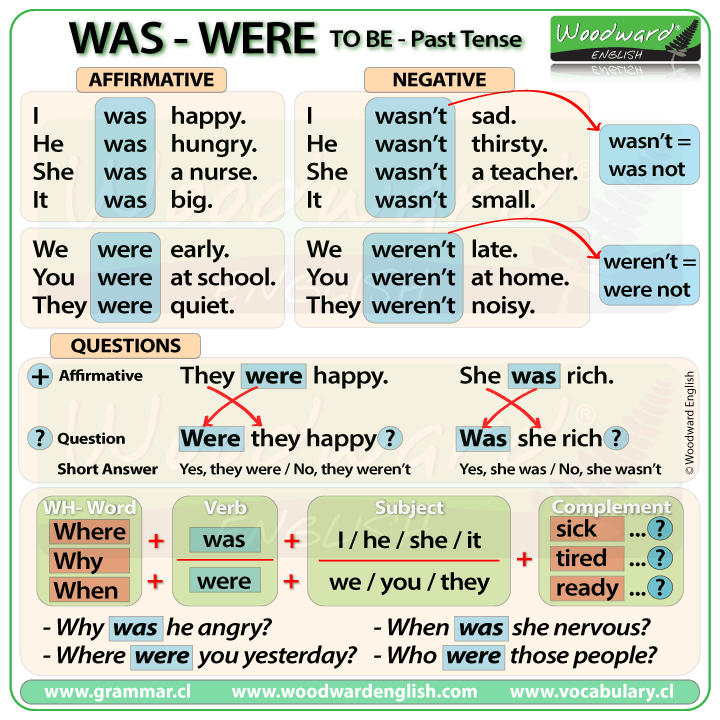
TO BE in the Past Tense - Summary Chart

Was Were - To Be in the past tense

Some - Any - A - An

Some - Any - A - An English Grammar Rules Source:  https://www.grammar.cl/Notes/Some_Any_A_An.htm A and AN We use  A/AN  (arti...